
By: Ben Munger, Director of Land Management & Mitigation
“A thing is right when it tends to preserve the integrity, stability and beauty of the biotic community. It is wrong when it tends otherwise.” Aldo Leopold, A Sand County Almanac, 1949
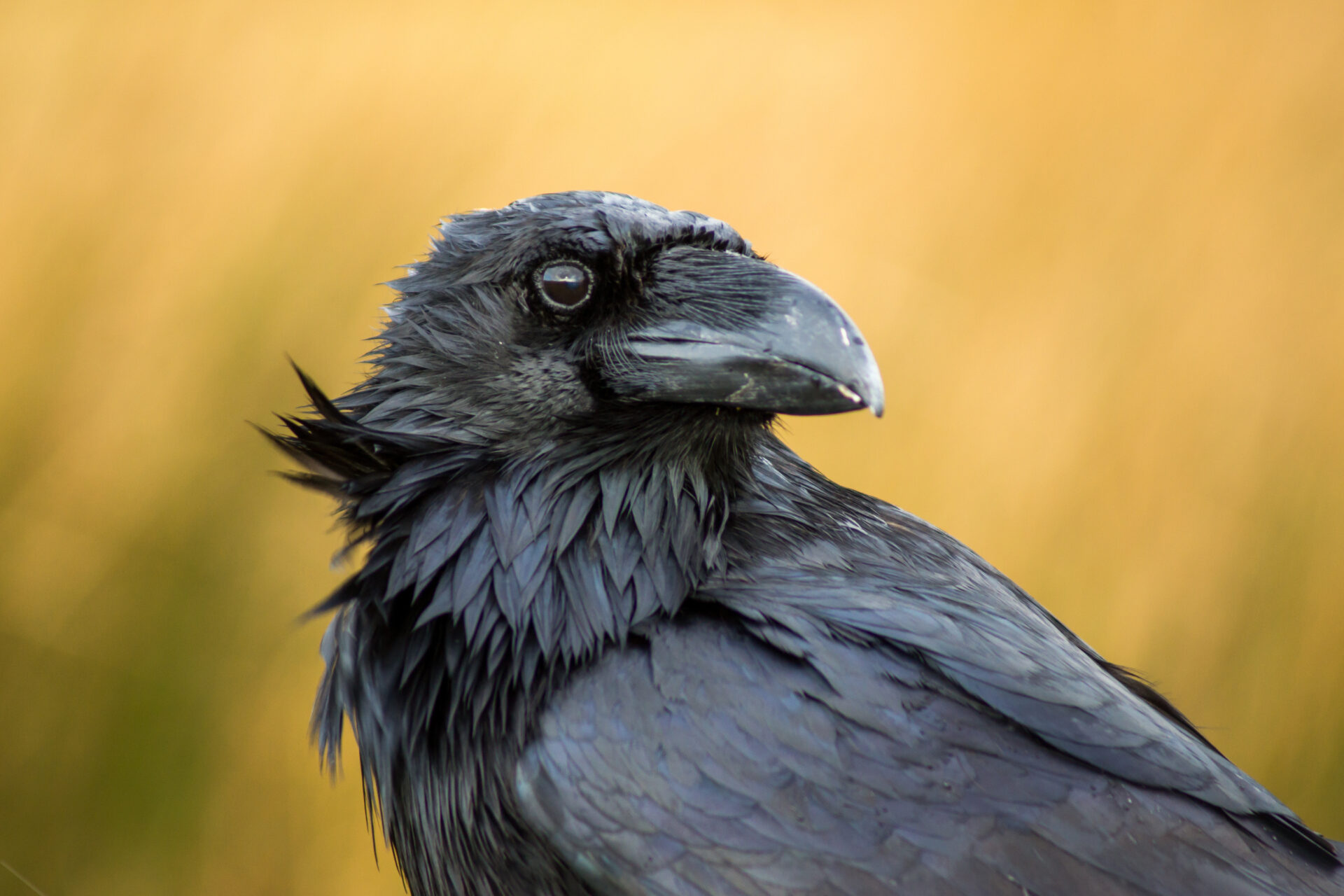
Ravens are welcome creatures in the Carrizo Plain. With a thicker beak and a wedge-shaped tail, you can tell them from crows. This is the story of one raven that recently made his home on land that Sequoia Riverlands Trust owns and manages there. A young raven perched atop a water tank was missing his lower leg, the result of an incident in the nest when he became tangled with a sibling in baling twine.
A raven on one leg
The young raven persisted and could be seen perched on one leg after he was untangled from the baling twine. SRT’s conservation biologists watched over him and protected him through a nearby prescribed fire. After the fire, the raven was seen flying with its parents. I was there to see the raven family fly, and I felt the significance of it, for the bird, and for Sequoia Riverlands Trust. What the birds felt at that moment, I do not know. They just peeled over us as we inspected the prescribed fire area.
Where ravens aren’t welcome
I’ve worked in other places where injured or young ravens were not seen as worthy of protection or consideration as a part of the biotic community. They were seen as expendable, not of any value to a place. At a small college ranch in eastern California, an injured raven I watched took refuge in barns and sheds to get out of heavy snow. Unable to fly, it was killed by a foreman in the middle of the winter. The cruelty and ignorance of that moment were staggering, but I am encouraged by Sequoia Riverlands Trust’s care for all wildlife and the importance placed on the biotic community of the Carrizo Plain.
What a raven does for the Carrizo Plain
SRT’s conservation biologists Camdilla Wirth & Lindsey Peria, and Carrizo Land Steward Ian Axsom all helped protect the young raven as they do with all the other creatures in the Carrizo Plain. It means a great deal to me to see them focus on the raven, often dismissed as low on the hierarchy of western wildlife but one that plays an important role as a scavenger, planter, recycler, and rodent hunter.
The raven also follows large predators like coyotes and mountain lions, which are abundant in this part of the Carrizo. Studies in Yellowstone National Park have shown that ravens fly much farther afield than previously known. Yellowstone ravens didn’t just follow wolves. Some flew more than 90 miles to reach a kill.
For us it may be useful to track ravens during pronghorn antelope fawning seasons. As lookouts for the Carrizo Plain they could help us prevent some of the predation by coyotes on the pronghorn fawns.
From Red Tank to Raven Tank
We’ve renamed the tank where the ravens built their nest. It was the Red Tank. Now it’s the Raven Tank and it serves as a lookout on Sequoia Riverlands Trust’s land in the Carrizo. It is not just a bird perch or nesting area. It is a reminder to always keep watch, and to be ready to meet the challenges that come with protecting the integrity, stability, and beauty of the biotic community.
Help keep watch on the Carrizo Plain
Keep Watch is one small story from the lands SRT cares for across California’s heartland. A monthly gift through the Enduring Lands Collective could help support that care, and you can see the Carrizo Plain for yourself at The Carrizo Ride, SRT’s spring cycling event.