LATEST UPDATE: 11/12/26
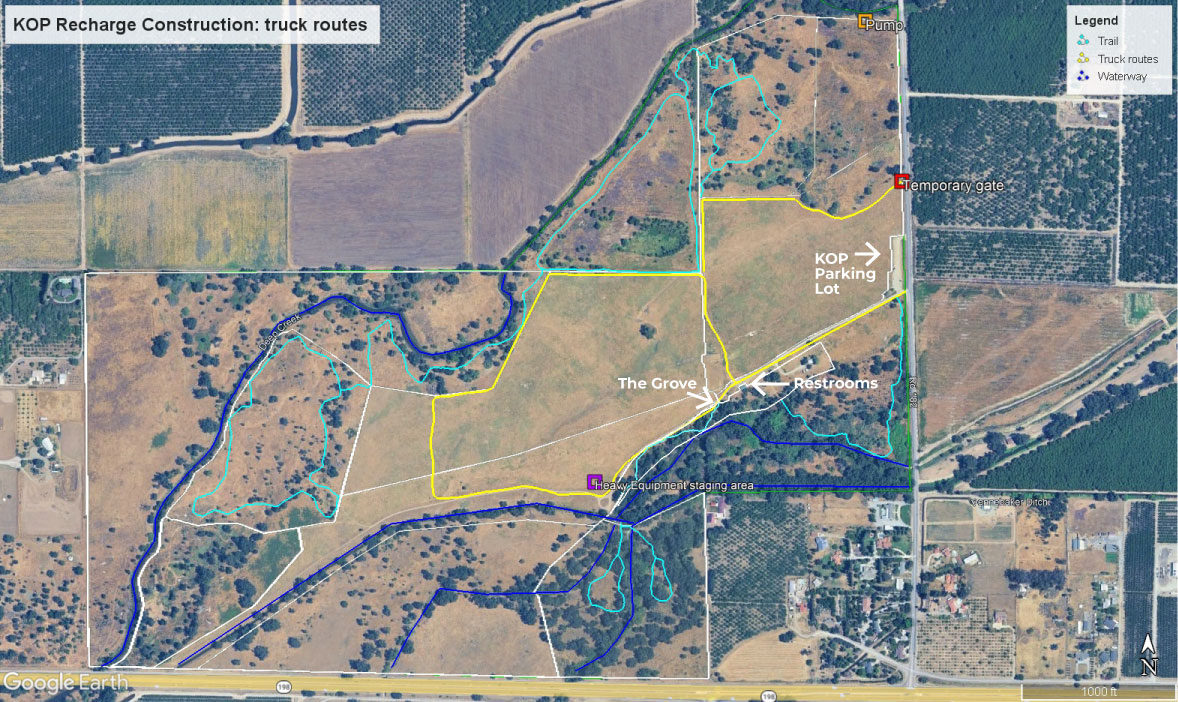
Trucks are running Lunes–Viernes, through approximately Enero. Weekends are usually truck-free. Pedestrians must yield to trucks.
Berm work is in the beginning phase, and soil is currently being brought in from another location.
Walk the trails at Kaweah Oaks Preserve this fall and you’ll hear something new under the birdsong: the low rumble of trucks. It isn’t the sound you expect in one of the last valley oak woodlands left in the San Joaquin Valley. But it’s the sound of a new chapter for the preserve. Soon, in wet years, floodwaters will spread beneath these oaks again.
The river that shaped the oaks
For thousands of years, the Kaweah River didn’t stay in its banks. In wet years, it spilled across the valley floor, soaking the land around what is now Kaweah Oaks Preserve. Those floods shaped everything here. Water seeped deep into the soil and recharged the groundwater. Wetlands and side channels filled with life. And the valley oaks, some of them centuries old, grew up with that seasonal flooding.
Today, that flooding no longer occurs naturally. For decades, Sequoia Riverlands Trust has worked to find a way to bring the water back.
Years of planning, now underway
That work is finally taking shape. In partnership with Kaweah Delta Water Conservation District and Greater Kaweah GSA, Kaweah Oaks Preserve is being prepared to hold water again. In wet years, the preserve will be flooded on purpose, in a controlled way that echoes the river’s natural rhythm.
To make that possible, crews are:
- Building low berms in strategic spots across the preserve
- Raising sections of existing roads so they stay usable when water is present
- Installing water gates near the preserve entrance to control where water flows
- Adding a pump, expected in Enero ahead of the coming wet season
- SRT staff worked alongside the project partners to design every piece of this with the preserve’s conservation values in mind.
Why the soil comes by truck
Here’s the part you’ll notice most. On a typical recharge project, the soil for berms is dug up on site. At Kaweah Oaks, that would have meant scraping away native vegetation, the same plants and habitat the preserve exists to protect.
Instead, the soil is being trucked in to minimize the loss of native vegetation on site. It means more trucks for a couple months, but it’s a short-term disruption chosen to protect the preserve for the long term.
What the water will do
When the first managed flood arrives, the benefits will spread well beyond the preserve boundary:
- The oaks: Valley oaks depend on water reaching their roots. Returning floods help sustain the mature trees and give the next generation of oaks a better chance to take hold.
- Groundwater: Water held on the preserve soaks down into the aquifer that the region’s farms, towns, and families rely on.
- Wildlife: Seasonal water brings seasonal life, creating habitat for birds, amphibians, insects, and the animals that depend on them.
- Recreation: Raised roads and walkable water gates mean most trails stay open during floods. Visitors will have a new chance to see the preserve as the river once shaped it: water spread beneath the oaks, and the wildlife that follows.
What to expect when you visit
Construction will run through approximately Enero. Here’s how to plan your visit:
- Trucks run Lunes–Viernes. Weekends are usually truck-free.
- Pedestrians must always yield to trucks. Trucks are large and need room to stop.
- Stay off roads marked “Truck Traffic Only.” Use the trails instead, and follow all posted signs.
- See the map for further details about road closures.
The preserve remains open throughout construction.
Heading to the Holiday Market? Construction will pause Diciembre 1–6 for the market. Installation of the water gates near the entrance may still be in progress that weekend, so watch for signs as you arrive.
After construction
Once the trucks are gone, Kaweah Oaks will look and feel much as it always has. The new berms are low and gently sloped, and as native plants grow back over them, they’ll blend into the landscape. A couple of roads will sit noticeably higher than before, and water gates will be set beneath the trails at key points where water flows. You’ll walk right over them, which means most trails can stay open even when the preserve is flooded.
The biggest change is the one this whole project is for: in wet years, more of the preserve will flood, and more often. During those floods, most of the Sycamore Trail will be underwater and inaccessible, and parts of the Valley Oak Trail may be too.
Then comes the wait for rain. The next wet year will now have the potential to bring the largest managed flood to the preserve, and the chance to see water spread beneath the oaks and throughout the meadow to a degree not seen for generations.
¿Preguntas?
Email info@sequoiariverlands.org or call (559) 738-0211.